Tuesday, April 29, 2014

Half the Fun Is Getting There—As Long as It Includes Japanese Toys!


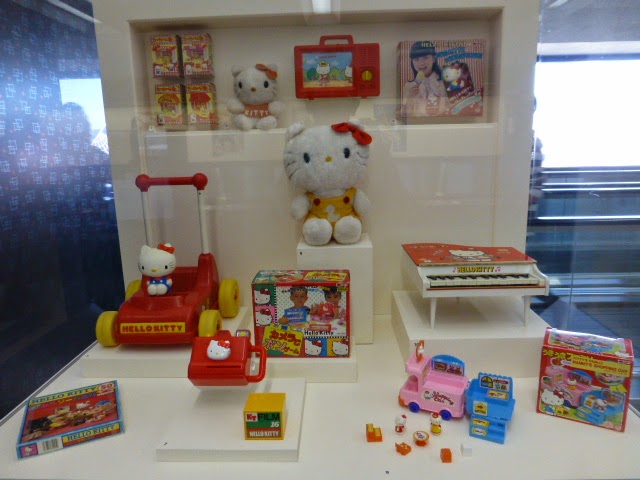
Half the fun really can be getting there. It helps to be flying instead of driving long hours. It also helps if you pass through the San Francisco International Airport. They’re just finishing up a wonderful exhibit on Japanese Toys from Kokeshi to Kaiju put on by the San Francisco Museum.


Who knew that toys could be quite so much fun? Because I was simply trying to kill time between flights on my way to Left Coast Crime, the big West Coast annual mystery conference, I happened to walk through Terminal 3 instead of taking the tram. I was completely delighted by the display of all kinds of Japanese toys.


The exhibit had old-style toys that were built during the Meiji period. It had wind-up toys and battery-operated toys and toys modeled off German and U.S. versions.


The most fabulous ones stemmed from Japanese TV, movies, and manga. There were Godzillas and speedmobiles, Ultramen, robots, and superpowers.


I had a big revelation. The little toy that Japanese friends had given us was not a cat, as I had supposed, but a dog! At least now I know what’s on my dresser.


One of the most surprising displays? A big pink and white dress made of Hello Kitties.


I went through the exhibit several times, taking pictures, taking everything in. Then I started people-watching. At first I had assumed the exhibit was for kids, but adults were stopped dead in their tracks at nearly every display. They were scrambling to find their cameras. They were taking pictures of the displays and posters and taking pictures of themselves with those displays. I had to really fight to get a picture with the Hello Kitty dress, for example!


At first I was puzzled as to why there were so many adults happily snapping pictures. Then I finally got it. It wasn’t that they were bored and trying to waste some time between flights. They were enjoying the rare opportunity to look creativity in the face and say, I love you.


That’s an important moment indeed.


Photos by D.R. Ransdell
For more on my mystery writing, please see http://www.drransdellnovels.com
 

Tuesday, April 15, 2014

What Happened to Spontaneity?

Technology has its price. One is spontaneity.

It used to be that if you arrived in a European city such as Florence by noon, you could find a hotel for the night. But with the help of on-line booking, people book weeks and even months in advance. If you don’t do the same, you wind up staying in an inconvenient, expensive hotel that’s far from where you want to be.

In other words, you have to join the crowd. In many ways, this is a big shame. How can I guess right now how many nights I really want to spend in Nice? I can’t. But I have to make a decision anyway.


Phuket, photo by D.R. Ransdell


I suppose in some ways this new system is useful. It forces me to think about things ahead of time. I have to plan my summer trip in April instead of as I go along. But I can think of plenty of times when it was great to be able to change my mind at the last minute. A prime example is when we were on the island of Phuket in Thailand. 


Patong Beach, photo by D.R. Ransdell


We’d gone on a day trip to Phang-nga when it started raining. And raining some more. The tour guide nonchalantly explained that the monsoons had started, and we could expect rainy days for the next weeks.


Phang-nga, photo by D.R. Ransdell


My friend and I immediately booked tickets to fly to Koh Samui, which is on the dry eastern side of the county. Our final days in the country were lovely. But what if we’d had reservations on Phuket that we couldn’t change? We would have been stuck in the monsoon playing cards in our room.

Perhaps we should have been more aware of the monsoon season! But no matter how much you plan, there are always things you just don’t count on.


Koh Samui, photo by D.R. Ransdell

When it comes to fiction, though, it’s no fun to have characters plan their trips ahead of time. Travel snafus make for great fiction! Hence in my novel THAI TWIST, the Campanello sisters combat the monsoon the “easy” way by making plans to go somewhere else. This is why I love fiction. You can be sure to make everything work out.

What about your own travel spontaneity? Has technology made traveling easier or better for you? How far in advance to you plan your trips? How often do you wish you could change your mind?

I’d write more, but I have to book hotel rooms for Paris before everyone else beats me out. I’ll be there at the end of June. In today’s world of on-line reservations, that’s just around the corner.


Happy traveler with a nice place to stay!


For details on THAI TWIST, please visit http://www-dr-ransdell.com

Tuesday, April 1, 2014

Chihuly Night Owl Magic

Visiting the Desert Botanical Garden in Phoenix to see the Chihuly installations by day was great. I loved every minute. But my friends and I had planned carefully. We'd chosen the 4-8pm shift so that we could enjoy the exhibit by day and also by night.

Photo by D.R. Ransdell

The images that had dazzled us a couple of hours earlier were even more mysterious and wondrous by night. (The lighting effects were excellent.) Thus we went through the whole exhibit all over again, taking photographs as best we could.


These purple columns looked like they belonged on the moon! During the day they had snaked up from the grass pleasantly enough, but by night, they were Halloween, they were imagination, they were outer-wordly!

Photo by D.R.


So was the boat floating in the lagoon. It was quiet, peaceful, and nearly unbelievable. You wanted to reach out and touch it. You wanted to wade right there in the water and swoosh the boat gently from side to side.


Photo by D.R.


Instead we merely walked around, marveling at the glass and the color and the lights. We were so thankful we had enough time to get all the way around the exhibit.

Photo by D.R.

It was a Saturday, and as we left, other people were arriving for the nighttime viewing, which is from 8pm to midnight on selected Saturdays. I was amazed and thrilled by how many people were pouring in to see the exhibit. And here I thought Chihuly and his work were little-known secrets!


Photo by D.R.


If you can possibly get to the exhibit, you'll be well rewarded.  (It goes through mid-May.) Whether by day or by night (and hopefully by both), you're sure to find a dazzling array of images. They'll sparkle your imagination. You might not ever want to leave.

Photo by D.R.


For THAI TWIST, a novel that makes use of my traveling adventures, please check out my website, http://www.dr-ransdell.com


Tuesday, March 18, 2014

Phoenix + Chihuly: Winning Combination


Photo by D.R. Ransdell


One of the best places to visit in the U.S. right now is just up the road from me. The Desert Botanical Garden in Phoenix is hosting "Chihuly in the Garden" until May 18th.
Photo by D.R. Ransdell
The garden hosted a Chihuly event about five years ago, and I had the chance to visit it as well. I loved every minute--seeing all the beautiful, colored glass amidst the plants was a thrilling experience. When I learned that the garden was hosting another exhibit, I wanted to be sure to attend.

Photo by D.R. Ransdell

 But I expected this new exhibit to be a copy of the old one. This didn't bother me--I would have been happy to have enjoyed the same experience.

To my surprise and delight, almost everything was different. One arrangement might have been the same. Everything else was fresh--and in my opinion, wonderful.


Photo by D.R. Ransdell
I can't explain why I love the Chihuly glass pieces so much. They're unusual, they're fresh, they're colorful, they're exciting.

They're funny.

It's so odd to see glass with plants and yet, the arrangements are so cleverly constructed that they fit right in.

They're amazing.


Photo by D.R. Ransdell


I wasn't the only one who thought so. Granted, my friends and I visited the garden on a Saturday, so it's only fitting that there was a crowd, but I was actually thrilled to see so much interest in this work. There was an amazing array of visitors from all age groups speaking all kinds of languages.


Photo by D.R. Ransdell


There was even a young girl who put her hand on one of the glass bulbs! I wanted to cry out, because her mother wasn't paying any attention to her, but luckily!!!!! nothing broke.

Dale Chihuly and his team would probably have been pleased. They want their art to be for everyone. (However, perhaps there is a limit!)

Moral of the story: If you're close to Phoenix, you should visit this lovely garden. You can reserve a time for 8-12, noon-4, or 4-8 p.m.


Photo by D.R. Ransdell

Tuesday, March 4, 2014

Oh, To Be in Ivrea for Carnival!


It would be great today to be in New Orleans for Mardi Gras. You could walk from parade to parade catching beads and drinking alcohol on the streets while wearing a funny costume. It would be terrific to be in Venice where you could be taking pictures of the most exotic masked figures who would be strutting around just for you. But the very best place of all to be today would be Ivrea, Italy.


Ivrea is a small city near my ancestors’ neck of the woods in the section of Italy called Piemonte, or Mountain Foot. The town is an hour north of Turin, which is a city at least most people have heard of. Ivrea might be small, but on the subject of carnival, it has no rivals. Today, for the third day in a row, people will go around town throwing oranges at one another.

“Oranges, you say?” Yes. Oranges imported from Sicily. Today thousands of oranges will be sacrificed in the name of tradition.


 “What kind of silly tradition is that?” you might ask. To make a long story short, in the Middle Ages or so, brides were supposed to spend their first nights not with their chosen husbands but with the ruler of the town, who was a member of nobility. In Ivrea one night, the miller’s daughter rebelled. She attacked the nobleman, murdered him, and survived. She became the town’s revered hero. In her honor, then, the townspeople of Ivrea and neighboring areas join squads. Either they join squads of noblemen and women and drive around in carriages drawn by horses, or they join squads of peasants and stay in the squares ready for battle.

During the course of the day, all the horse carriages, which will number around fifty, will drive through the four main squares to have battles with the Mercenari and other squads. The “nobles” in the carriage will furiously throw oranges down at the “peons” who will fight back as quickly as possible.

Oranges will fly through the air until the whole piazza looks like a juggling match gone wrong. Sometimes an orange will bounce the wrong way and even attack the spectators. As long as you’re wearing a red cap, declaring that you are neutral, you are not a target—until a stray orange splats all over your coat. Then suddenly you are part of the fray.

The first time I saw the orange battles of Ivrea, my mouth dropped open. I couldn’t believe that people were wasting so many oranges or that the air could actually be perfumed with the smell of citrus. Such a thing was inconceivable. But that was back in the 80s. Today the traditional is still going strong. By the time I wake up Arizona time, the air in Ivrea will be scented with oranges. The big crates of fruit will be emptied, one by one, as the squads madly grab for ammunition to throw at their peers.


When the battles finally conclude, the day’s light will be coming to an end. The tired orange throwers will retire for showers—actually, my cousin doesn’t even let her sons in the house. They have to shower off outside no matter how cold it is to get the worst of the sticky liquid off their clothes and out of their hair. Then they can go in the house for a regular warm shower. After that, you might think the tired battlers would go to bed, but of course, that’s not the case. They will have a deep need to go out and celebrate their triumph by partying far into the night.

 If I were in Ivrea today, I would not join in on the battles. For one thing, it’s quite expensive. To participate, you have to have the right outfit, and you have to pay a fee to your squad. Most of that money goes for clean up. The horses don’t care that it’s carnival or not, so after the first few hours, the oranges blend with horseshit with spilled wine, with lost scarves. The streets become a slippery, gluey mess. It’s far better to crash at my friends’ house. They have a balcony that overlooks one of the biggest squares. From there I not only have a great view, but from three stories up, I don’t get any oranges.


All in all, Carnevale in Ivrea is a glorious celebration. The fighters say that it helps them get out their frustrations, that they can unleash all of their disappointments in one big, three-day festival. I prefer to get out my frustrations by killing off ex-boyfriends in books or short stories, but I admit that throwing oranges for three days at carnival would be a more efficient solution than putting in the long hours it takes to write a book. But it would also be a whole lot messier. Plus I’d have to find some earrings to match the vibrant carnival color of orange.


Mercenari Pictures

Short YouTube Video from 2009


D.R. Ransdell is a novelist in Tucson, Arizona, but her Italian roots take her to Italy time and time again. Please visit her at http://www.dr-ransdell.com.


Tuesday, February 11, 2014

Travel to Bolivia with Ignore the Pain


Note: I'm stepping aside today to invite Janet Greger to share some of her insights. Please welcome her!


Janet Greger:

I love to travel to interesting places. It’s hard to explain what makes a place interesting, but I’ll try. Maybe I’m a bit of an adrenaline junkie, but locations that were once forbidden (i.e. China Lebanon, and Cuba) are interesting. Places with history (e.g. London, Paris, Berlin, Beijing, and Washington, D.C.) and/or that still exhibit a unique “culture,” (such as Chiang Mai in Thailand, New Orleans, and Taos in New Mexico) are interesting.

Then sometimes in my travels I discover a place that didn’t make any of my lists, but which fascinated me. Bolivia is such a place.

Bolivia is somewhat isolated because much of it is at such a high altitude, i.e. more than 10,000 feet, and it is landlocked. The net result is the indigenous people have retained a distinctive culture. Bolivia’s rich history includes the silver mines near Potosí, which were the richest source of silver in the New World Spanish Empire. Bolivia is a sore point in US foreign policy now because it is the third largest producer of coca (the raw material for cocaine), and its current President Evo Morales is believed to be a coca grower.


Locations can add zest to novels. I decided to add a new twist to my third medical thriller Ignore the Pain by sending my heroine Sara Almquist to an exotic location – Bolivia.

The problems in Bolivia are real. Over 6% of the children born in Bolivia die before five years of age. That’s a big improvement; in 1990, 12.5% died before five years of age. Hence, I have Sara serving as an epidemiologist on a team sent to assess factors influencing childhood mortality and morbidity in Bolivia. (Yes, I have served a science consultant overseas.)

Instead of reciting statistics about the grinding poverty in Bolivia, I had Sara relate a story to her colleague Lew in Ignore the Pain. Sara’s story is based on the explanation an artist in the La Paz area gave me for a picture seen everywhere in Bolivia in 2006.

“This picture was emblazoned on all sorts of items in the markets of La Paz during my previous trip to Bolivia. When I visited a studio by the Valley of the Moon, an artist claimed he knew the story behind this drawing.”

Lew stopped shuffling papers and cocked his head. Sara continued. “He said when poor women in rural areas have twins, they give the smaller infant to the mountain gods. Supposedly this picture depicts the sad scene of a mother and her female relatives walking up the mountain to make their sacrifice.”

“Wouldn’t happen. Bolivia is a Catholic country.”

“That’s what I said. The artist laughed at me and claimed the women in the rural villages knew from experience they couldn’t produce enough milk for two children. And one healthy child was better than two dead ones.” Sara paused, “Don’t know if the story is true, but it would be interesting to collect data on perinatal mortality and the incidence of multiple births. We might be surprised by the results.”

There are lots of things to do in Bolivia. In Ignore the Pain, you get a guided tour of attractions in Bolivia, like the Witches’ Market of La Paz. You’ll not only see native women in black bowler hats and layers of brightly covers skirts sell llama fetuses for offerings to the gods, but also smell the aromas of the city. (Not all are pleasant.) You’ll also travel across the austere, almost Mars-like landscape of the Altiplano to see the exotic stone columns in the Valley of the Moon and the shores of Lake Poopó, long a summer nesting spot for flamingos and now polluted by mining runoff.

Sara is your guide. Of course, her view of Iglesia de San Francisco in La Paz might be a little different that that of the average tourist. Someone determined to kill her is chasing her across the church’s roof. The description of the roof is realistic – I’ve been there.

Unlike Sara, you won’t be exposed to danger. For example, the mountain Cerro Rico near Potosí is so riddled by five hundred years of silver mining that it is literally getting shorter. Sara and her friends are caught in a cave-in.

You’ll wish you were sampling juicy chicken salteñas, locro (potato stew), and quinoa with Sara and her colleagues, but be glad you missed the greasy stews made of cuy (guinea pig) and llama.

Although you may decide Bolivia is not their idea of a relaxing vacation, you’ll be thrilled by it vicariously in Ignore the Pain. I

P.S. The cover represents the red, yellow, green stripes of the Bolivian flag across the woman’s face.

Blurb: In Ignore the Pain, Sara Almquist couldn’t say no when invited to be the epidemiologist on a public health mission to assess children’s health in Bolivia. Soon someone from her past is chasing her through the Witches’ Market and churches of La Paz. Unfortunately, she can’t decide which of her new colleagues, especially the unsavory Xave Zack, to trust as she learns more about coca production and the god Tio of the silver mines of Potosí than she ever wanted to know.


Bio: For more on me, check out my website: www.jlgreger.com and blog: http://www.jlgregerblog.blogspot.com.

Here are thumbnail sketches of my two other medical thriller/mysteries. Learn whether the Philippine flu or a drug kingpin caught in a quarantine is more deadly in Coming Flu. Discover whether an ambitious young “diet doctor” or old-timers with buried secrets are killers in Murder: A New Way to Lose Weight.

My novels are available in paperback and Kindle formats from Amazon.